Where Edmonton Is Actually Building

If you want to know where Edmonton is heading, the listings tell you what is for sale today and the development permits tell you what is coming. The two point in the same direction, and it is a direction worth understanding before you buy into it.
The short answer
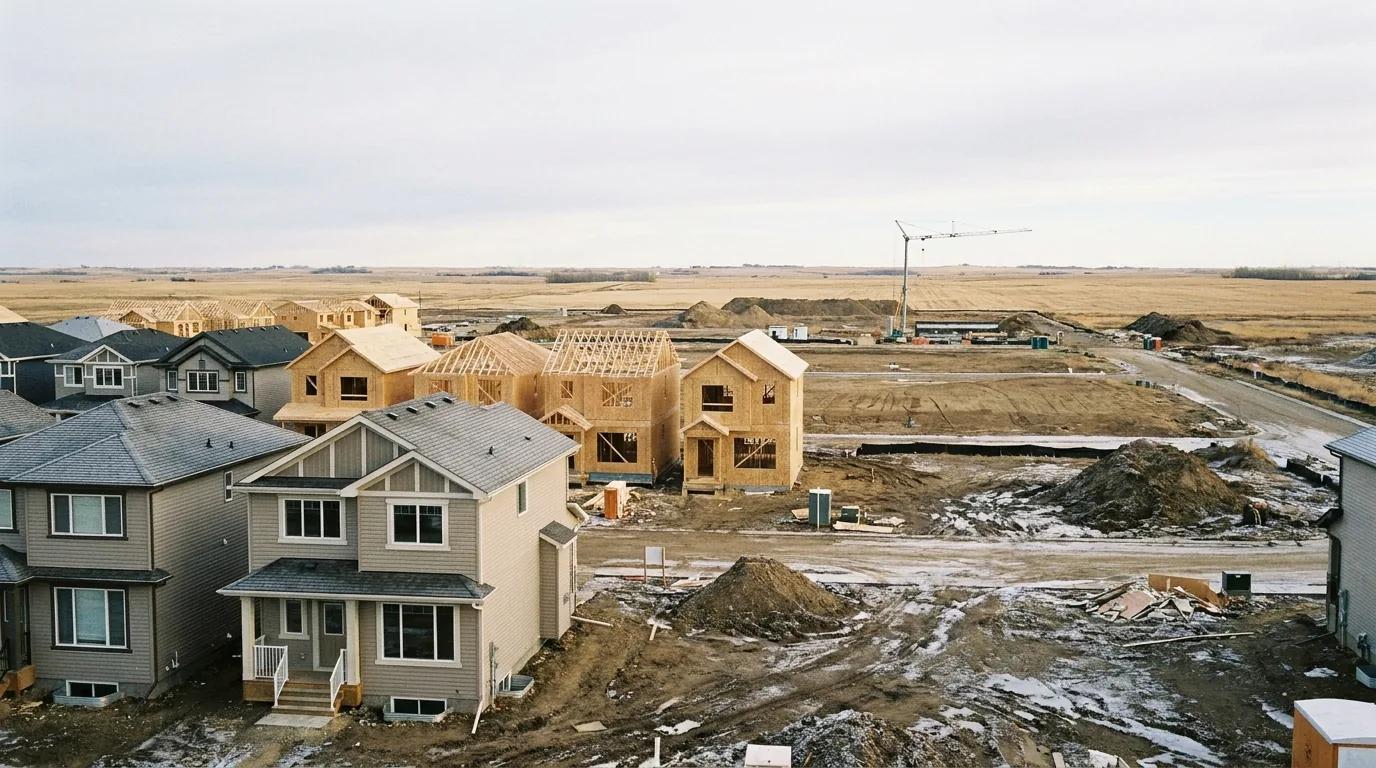
Nearly 14,000 development permits were issued across Edmonton's communities in the last twelve months, and the busiest are almost all classified as developing — Edgemont, Keswick, The Uplands, The Orchards, Stillwater. Buying into one of these means buying into a construction site that will become a neighbourhood over several years.
Key takeaways
- Around 14,000 development permits were issued across Edmonton communities in twelve months, worth roughly $3.5 billion in declared value.
- Building concentrates heavily: the top ten communities account for a large share of all activity.
- Almost every high-activity community is on the city's outer edge and classified as developing.
- Buying there means years of construction traffic, unfinished amenities and a young tree canopy.
- It also means warranty coverage, modern efficiency and neighbours arriving at the same time you do.
Who this guide is for
Edmonton buyers considering a new or newer community, and anyone who wants to know what is being built near a home they are looking at. Permit data comes from the City of Edmonton's open data portal.
Where the building is happening

A permit is a beginning, not a finished house. What the chart shows is where cranes, trucks and construction crews are, and where they will be for a while yet.
What buying into a developing community is really like
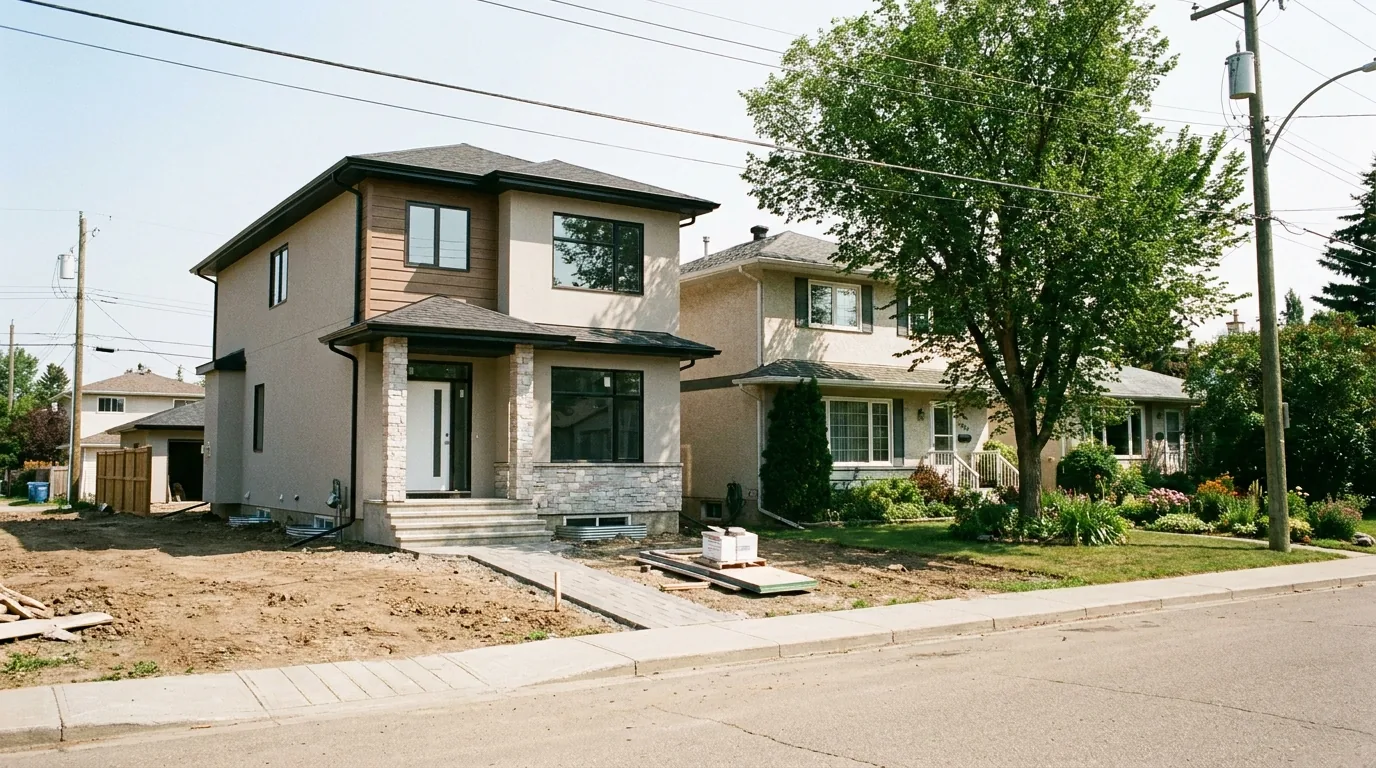
The first few years are construction. Trucks on the road, mud in wet weather, framing crews starting early. It ends, but not quickly.
Amenities lag the housing. Schools, shops and transit arrive once the population justifies them, which can be years after the first residents.
The landscape is young. New communities are open and treeless by definition. Shade takes a decade or more.
Everyone arrives together. Many buyers find this the best part — a whole street of people moving in at once, often at a similar stage of life.
Ask the builder or the City what is planned for the empty land nearest the home you are considering. “Green space” on a marketing map and “future development” are very different futures for the view out of your window.
What it means for established communities
Steady permit activity in a mature community usually means infill and renovation rather than expansion — a sign of an area people are investing in. That can bring construction next door for a season, and it generally reflects confidence in the location.
Very low activity is not automatically bad. Plenty of settled communities simply have nothing left to build on.
How to use this before you commit
- Visit on a weekday morning, when construction is at its loudest, not on a quiet Sunday.
- Check what is planned for adjacent vacant land through the City.
- Ask when the school and the shops are expected, and treat the answer as an estimate.
- Compare against a mature community at the same monthly payment before deciding.

Ryan McCann
Ryan is an Edmonton-based REALTOR® with MaxWell Polaris and the person behind Padster. He's helped over 2,200 clients in the Edmonton area buy and sell their home.
Contact Ryan today at 780-964-8445 to talk through your next step.
Last reviewed 18 August 2026. General information for Edmonton-area buyers — not individualized financial, mortgage, legal or tax advice. Mortgage rules, government programs and market figures change; confirm current details with a licensed mortgage professional, an Alberta real-estate lawyer, or the relevant government source before making a decision. Padster is not a brokerage.
Sources
- City of Edmonton — Open Data Portal (development permits)
- City of Edmonton — Home improvement permits
- City of Edmonton — Projects and plans
Your next step
Compare a new community against a mature one
See what is listed in the developing communities and the established ones side by side, priced by monthly payment.
Browse Edmonton by neighbourhoodFrequently asked questions
Which Edmonton communities are growing fastest?
By development permits issued in the last twelve months, the busiest are communities on the city's outer edge such as Edgemont, Keswick, The Uplands, The Orchards at Ellerslie and Stillwater — almost all classified as developing.
What is a development permit?
A City approval to proceed with construction or a change of use. It marks the start of a project rather than a completed home, so permit counts show where building is beginning, not where people are already living.
Is it a good idea to buy in a community still under construction?
It depends what you value. You get a new home with warranty coverage and neighbours arriving at the same time; you also get years of construction, amenities that arrive later, and no mature trees.
How can I find out what will be built next to a home?
Ask the City about the zoning and any active applications on adjacent land, and ask the builder directly. A marketing map showing green space is not the same as land designated to stay that way.
Where does this permit data come from?
The City of Edmonton's open data portal, aggregated by community over the last twelve months.