Poly-B Plumbing in Edmonton Homes: What It Is and What to Ask
Poly-B is the single most common thing a buyer hears about an Edmonton home built in the 1980s or early 1990s, and almost everything said about it in a group chat is either overstated or twenty years out of date.
The short answer
Poly-B (polybutylene) is a grey flexible water-supply pipe used widely in Canadian homes from roughly 1978 to 1995. It is not banned, not hazardous, and not automatically a reason to walk away. It matters because some insurers ask about it and because its failures tend to be sudden rather than gradual. If a home is from that era, find out what the supply piping actually is before your conditions come off.
Key takeaways
- Poly-B was installed in Canadian homes roughly 1978–1995.
- Grey, flexible, usually with a stamp on the pipe — a plumber or inspector can identify it in minutes.
- It is legal to own, sell and insure. Insurer requirements vary, which is why you ask yours rather than assume.
- Many Edmonton homes of that age have already had it replaced. Ask for the records.
- The risk is water damage, not health. Failures are typically sudden.
Who this is for
Anyone looking at an Edmonton home built between the late 1970s and the mid 1990s — which is a very large share of the city’s housing stock, including much of Mill Woods, Castle Downs, Millwoods-era condos and a good deal of the west end.
What Poly-B actually is
Polybutylene is a flexible plastic pipe used for water supply lines. It was cheap, quick to install and widely adopted across Canada from roughly 1978 until the mid 1990s. In Edmonton that maps almost exactly onto a particular building era, which is why the property pages on this site flag the years rather than the material — a listing rarely says what the pipe is.
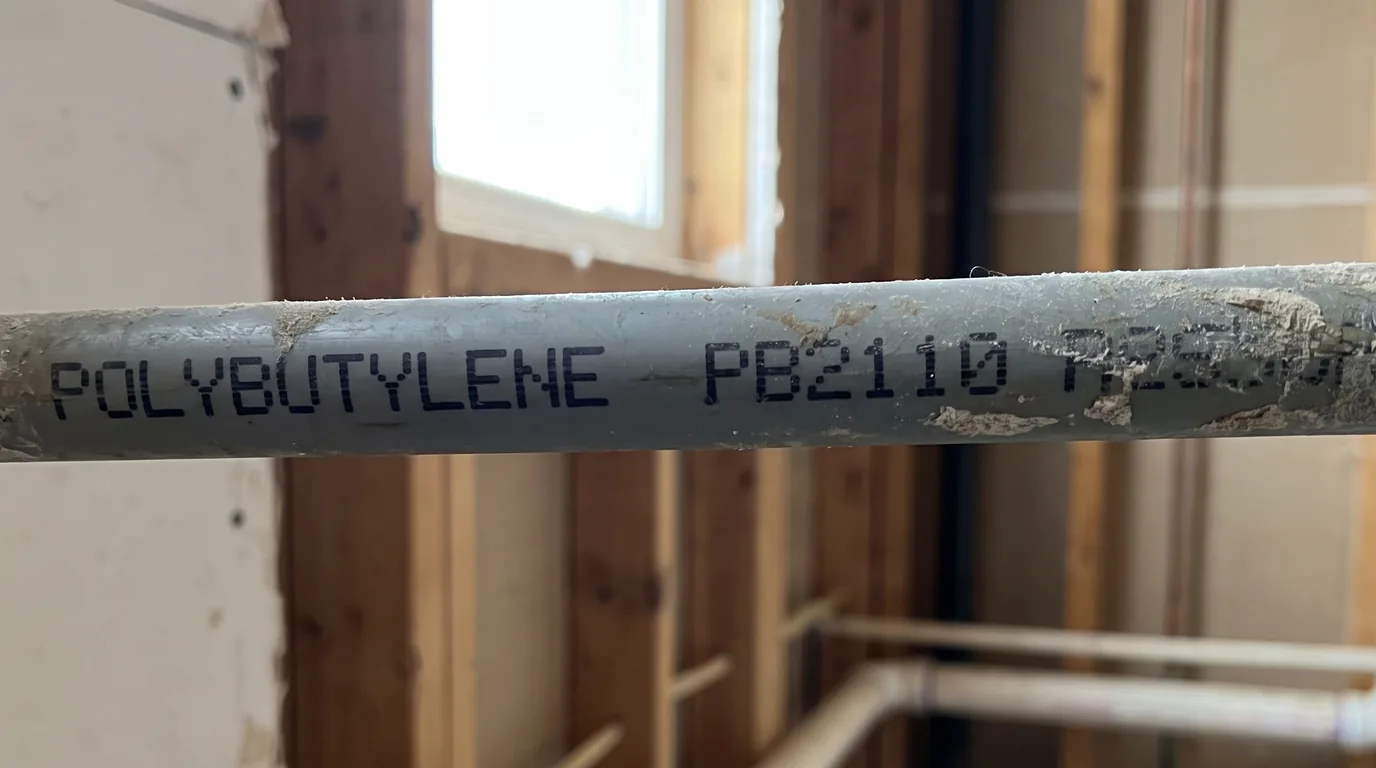
It is usually grey, sometimes black or blue, flexible rather than rigid, and typically marked with a stamp along its length. A plumber or a home inspector can identify it quickly where the piping is visible — usually at the water heater, under sinks, and in an unfinished basement ceiling.
Why it has a reputation
The concern is not that Poly-B is dangerous to live with. It is that the failure mode is unkind: rather than a slow drip that stains a ceiling and gives you notice, Poly-B tends to fail at a fitting or split along the pipe, releasing a lot of water quickly. In a finished basement that is an expensive afternoon.
Contributing factors are generally understood to include the fittings used, water chemistry and pressure, and how the pipe has aged. None of that tells you anything definitive about one specific house, which is the whole reason to have it looked at rather than reasoned about.
Does Poly-B affect insurance in Alberta?
It can, and this is the part worth doing properly rather than guessing at. Insurers set their own appetite: some will write the policy without comment, some ask questions about the plumbing, some price it differently, and some decline. That range is exactly why a blanket claim either way is wrong.
The practical move is to get a quote before your conditions come off, not after. Tell the insurer the age of the home and what the plumbing is, and let them answer. An accepted offer with a financing condition and an insurance problem discovered late is a bad place to be.
Ask the insurance question in the same week as the inspection, not after it. Insurance is not usually a formal condition in an Alberta offer, so nothing in the contract protects you if it turns out to be a problem.
Has it already been replaced?
A large number of Edmonton homes from this era have been repiped, often to PEX, and that is the single most useful thing to establish. Sellers who have done the work usually say so in the listing remarks, because it is worth money to them.
If the remarks mention Poly-B at all, read them carefully: sellers mention it either to disclose that it is there or to say it is gone. Those are opposite meanings in similar words. Ask for invoices, permits where applicable, and the date of the work.
- Was the whole house repiped, or only part of it?
- What was it replaced with, and by whom?
- Are there invoices or a permit?
- Is any original piping left behind a finished wall?
What to do if a home you like has it
Nothing dramatic. Poly-B is a negotiating item and a planning item, not usually a deal breaker.
- Have the inspector confirm the material and note where it is visible.
- Get the insurance answer in writing before conditions come off.
- Ask a licensed plumber what a repipe on that specific house would involve — access matters more than square footage.
- Decide whether you are pricing it into the offer or planning it as a project.
A home with original Poly-B and a finished basement is a different job from a bungalow with an open ceiling. That is why nobody can quote you a number from a listing photo.
What a repipe actually involves
Replacing Poly-B means running new supply lines — usually PEX — from the water entry to every fixture. The pipe itself is not the expensive part. Access is.
- A bungalow with an unfinished basement is the straightforward version: most of the run is reachable from below.
- A finished basement means opening ceilings and walls, then repairing them. The drywall and paint afterwards can rival the plumbing.
- Two-storey homes need access to the upper floor, often through ceilings below.
- Kitchens and bathrooms are the fiddly parts, because that is where the fixtures are.
This is why nobody can quote a repipe from a listing photo, and why two identical-looking homes can differ substantially. Get a plumber to look at the actual house.
Partial replacement, and why it matters
Some homes have had the visible or accessible piping replaced while original pipe remains behind finished walls. That is not dishonest — it is often what was practical at the time — but it means the house is not fully repiped, and an insurer asking the question may not treat it as though it were.
Ask specifically: was it a full repipe or a partial one, and is any original Poly-B still in the building? A plumber can usually tell you where the new pipe stops.
Poly-B in a condo
In a condominium the answer depends on where the pipe is. Supply lines inside your unit are usually yours; lines running through common property usually belong to the corporation. That distinction decides who pays and who decides when work happens.
The condo documents are where this lives. Look for whether a building-wide repipe has been done, is planned, or has been discussed and deferred — and whether the reserve fund study accounts for it. A deferred building-wide plumbing project is the kind of thing that turns into a special assessment.
A reserve fund study that does not mention plumbing in a building from this era is worth asking about, not worth assuming is good news.
Questions worth asking before you offer
- What material is the water-supply piping?
- If it has been replaced — when, by whom, all of it or part of it, and are there invoices?
- Has there been any water damage claim on this home?
- For a condo: has the building repiped, and what does the reserve fund study say?
- What will my insurer write, and on what terms?
If you already own a home with Poly-B
You do not need to do anything today. Know where your main shut-off is and that it works, consider a leak-detection device or an automatic shut-off valve, and keep an eye on visible piping and fittings. If you are already renovating a basement, that is the cheapest moment you will ever have to repipe, because the ceiling is open anyway.
What this does not mean
It does not mean the house is unsafe, uninsurable or unsellable. Homes with Poly-B trade in Edmonton every week. It means there is a specific question with a specific answer, and you want the answer during the condition period rather than in your second winter.

Ryan McCann
Ryan is an Edmonton-based REALTOR® with MaxWell Polaris and the person behind Padster. He's helped over 2,200 clients in the Edmonton area buy and sell their home.
Contact Ryan today at 780-964-8445 to talk through your next step.
Last reviewed 24 August 2026. General information for Edmonton-area buyers — not individualized financial, mortgage, legal or tax advice. Mortgage rules, government programs and market figures change; confirm current details with a licensed mortgage professional, an Alberta real-estate lawyer, or the relevant government source before making a decision. Padster is not a brokerage.
Sources
- Square One — Poly-B plumbing
- Insurance Bureau of Canada — home insurance basics
- City of Edmonton — permits for home and property
Your next step
Not sure what to ask about a specific home?
Send the listing over and he will tell you what he would want checked on that particular house before conditions come off.
Ask RyanFrequently asked questions
What years was Poly-B used in Canadian homes?
Roughly 1978 to 1995. Padster flags Edmonton listings built in that window because a listing almost never states the plumbing material, so the build year is the prompt to ask.
Is Poly-B illegal or unsafe to live with?
No. It is not banned and it is not a health hazard. The concern is water damage: Poly-B tends to fail suddenly at a fitting or along the pipe rather than leaking slowly, which is expensive in a finished basement.
Can you get home insurance with Poly-B in Alberta?
Usually, but insurers differ. Some write the policy without comment, some ask questions, some price it differently and some decline. Get a quote on the specific home before your conditions come off rather than assuming either way.
How do I know if a home still has Poly-B?
A plumber or home inspector can identify it quickly where piping is visible — at the water heater, under sinks and in an unfinished basement ceiling. If the listing mentions Poly-B, read carefully: sellers mention it either to disclose it or to say it has been replaced.
Should I walk away from a house with Poly-B?
Usually not. Homes with Poly-B sell in Edmonton every week. Treat it as a question with an answer — confirm the material, get the insurance position, and price a repipe if you want one.
What is Poly-B usually replaced with?
Commonly PEX. What matters for a buyer is whether the whole house was done or only part of it, when, by whom, and whether there are invoices.