Asbestos and Vermiculite in Older Edmonton Homes
Asbestos and vermiculite come up on almost every older Edmonton home, and the sensible response is almost never the dramatic one.
The short answer
Asbestos was used in Canadian building materials for decades and can be present in homes built before roughly 1990. Vermiculite loose-fill attic insulation is the specific one buyers ask about, because some of it may contain asbestos. Undisturbed, in good condition and left alone, these materials are generally not considered a hazard. The risk comes from disturbing them — which means the question is not “is it there” but “what happens when you renovate”.
Key takeaways
- Pre-1990 is the era to ask about.
- Intact and undisturbed is generally not the problem. Sanding, cutting and demolition are.
- Vermiculite attic insulation should be treated as suspect until tested.
- Testing is the only way to know — you cannot identify it by eye.
- This changes your renovation plan and budget more than it changes whether to buy.
Who this is for
Buyers of Edmonton homes built before about 1990, and in particular anyone planning to open up walls, redo a basement, or add insulation.
Where it turns up in an older Edmonton home
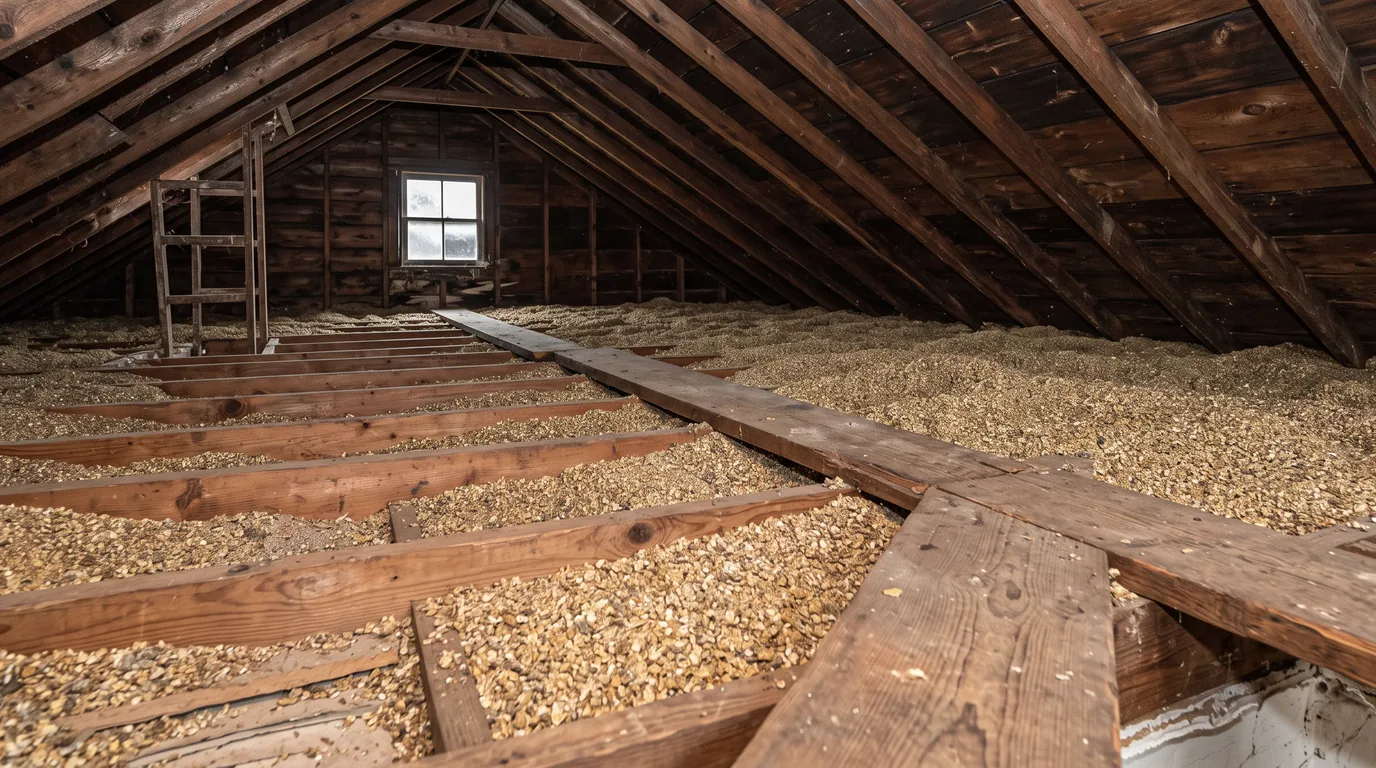
- Vermiculite loose-fill attic insulation — small, pebbly, grey-brown or gold flecks.
- Vinyl floor tiles and the adhesive under them.
- Textured or “popcorn” ceiling finishes.
- Drywall joint compound in some eras.
- Insulation around older ducting, pipes and mechanical equipment.
None of these is a reason not to buy a house. All of them are a reason to know before you start a project that turns them into dust.
Why undisturbed matters so much
The health risk from asbestos comes from inhaling airborne fibres. Material that is intact, sealed behind a finished surface, and left alone is generally not releasing fibres into the air you breathe. The moment it is cut, sanded, drilled or demolished, that changes.
The most common way an Edmonton homeowner creates an asbestos problem is by starting a basement renovation on a Saturday without testing first.
Vermiculite specifically
Vermiculite is a naturally occurring mineral that was used as loose-fill attic insulation. Some of it — not all — originated from a source with naturally occurring asbestos contamination. Because you cannot tell by looking, the standard guidance is to assume vermiculite attic insulation may contain asbestos and to leave it undisturbed unless it has been tested.
- Do not disturb it, store things in the attic on top of it, or use the attic as space.
- Do not sweep or vacuum it.
- Have it tested by a qualified professional before any attic work, including adding insulation.
- If removal is warranted, that is specialised abatement work, not a weekend job.
How it affects a purchase
Usually less than people expect. It is rarely a reason to walk away from a house you otherwise want. It is a real reason to adjust what you thought a renovation would cost and how long it would take, and to build testing into the plan before demolition rather than after.
If you are buying specifically to renovate, get the testing question answered during the condition period, because it changes the number the whole plan is built on.
What testing involves
You cannot identify asbestos by eye, and neither can a home inspector. Confirming it means a sample taken safely and analysed in a laboratory.
- A qualified professional takes small samples of the suspect materials.
- Sampling itself disturbs material, which is exactly why it is not a DIY step.
- Results identify whether asbestos is present and, usually, the type and rough proportion.
- Several materials may need separate samples — tiles, adhesive and joint compound are three different questions in one room.
Testing before a renovation is far cheaper than stopping a renovation halfway through because someone opened a wall and then worried about what they had just breathed.
Removal is not always the answer
Where material is intact and will not be disturbed, leaving it alone — or sealing it in place — is often the recommended course. Encapsulation means covering or sealing the material so fibres cannot become airborne, and it is a legitimate outcome rather than a shortcut.
Removal, where it is warranted, is abatement work: containment, negative air pressure, protective equipment, controlled disposal. It is specialised, it is regulated as workplace safety when contractors are involved, and it is not a job to hand to a general handyman because they said they had done one before.
If a contractor quoting your basement shrugs at the asbestos question, that is the answer about the contractor, not about the asbestos.
How this interacts with permits and trades
Once other people are working in your home, this stops being purely your decision. Contractors have obligations to their workers, and a reputable trade will ask about the age of the house before opening anything up.
Plan the testing before you book the work, not after. A renovation stopped mid-demolition for a lab result is the expensive version of this conversation.
Condos and older buildings
In a condominium, material in common property is the corporation’s responsibility, and buildings of the right age often have a management plan for it. Ask whether one exists and what it says.
For work inside your own unit, the corporation may have rules about what you can open up and who can do it. Read those before you plan a renovation, not after you have a quote.
If you already own an older home
Nothing needs to happen today if material is intact and undisturbed. What changes is how you approach work: assume pre-1990 materials may contain asbestos, test before you cut, and keep the results. A file with a lab report in it is worth having when you eventually sell.
The renovation-era trap
The most common surprise is not a 1955 house. It is a house that was renovated in the 1970s or 1980s, where the original material was covered rather than removed.
A basement finished in 1982 over a 1958 floor, or a ceiling boarded over rather than stripped, means the era of the material is the era of the layer underneath — not the era of what you can see. Renovation history matters as much as the build year, and sellers frequently do not know what is behind their own walls.
“Fully renovated” in a listing tells you about the finishes. It tells you nothing about what those finishes were installed over.
What this does not justify
It is worth saying plainly, because the topic invites overreaction: asbestos in a home is not an emergency, is not a reason to break a deal on an otherwise good house, and is not a reason to move out of a house you already live in.
Millions of Canadian homes contain some asbestos-bearing material and are lived in perfectly safely. The entire practical question is what happens when somebody decides to take a wall down — which is a question about planning and budget, not about danger on an ordinary Tuesday.
What to ask
- What year was the home built, and has anything been renovated since?
- Is there loose-fill insulation in the attic?
- Has any testing or abatement been done, and are there records?
- What does my inspector see that would be worth testing before I start work?
- For a condo: does the corporation have a management plan for the building?

Ryan McCann
Ryan is an Edmonton-based REALTOR® with MaxWell Polaris and the person behind Padster. He's helped over 2,200 clients in the Edmonton area buy and sell their home.
Contact Ryan today at 780-964-8445 to talk through your next step.
Last reviewed 24 August 2026. General information for Edmonton-area buyers — not individualized financial, mortgage, legal or tax advice. Mortgage rules, government programs and market figures change; confirm current details with a licensed mortgage professional, an Alberta real-estate lawyer, or the relevant government source before making a decision. Padster is not a brokerage.
Sources
- Health Canada — health risks of asbestos
- Alberta Health Services — asbestos and health
- Government of Canada — vermiculite insulation
Your next step
Not sure what to ask about a specific home?
Send the listing over and he will tell you what he would want checked on that particular house before conditions come off.
Ask RyanFrequently asked questions
What year did homes stop using asbestos in Canada?
There is no single clean cut-off, but pre-1990 is the era to ask about. Asbestos was used in a wide range of building materials for decades before that.
Is asbestos in a home dangerous if I do not touch it?
Material that is intact, undisturbed and sealed behind a finished surface is generally not considered a hazard. The risk comes from inhaling airborne fibres, which is why cutting, sanding, drilling and demolition are the concern.
Does vermiculite insulation always contain asbestos?
No. Some of it does, from a source with naturally occurring contamination, and you cannot tell by looking. The standard guidance is to assume vermiculite attic insulation may contain asbestos and leave it undisturbed unless it has been tested.
Can I add insulation over vermiculite?
Not without testing first. Attic work of any kind is exactly the activity that disturbs it. Have it tested by a qualified professional before anyone goes up there to work.
Should asbestos stop me buying a house?
Usually not. It more often changes what a renovation will cost and how long it takes. If you are buying specifically to renovate, get the testing question answered inside the condition period, because it changes the number the plan is built on.
Where is asbestos found in older Edmonton homes?
Commonly vermiculite attic insulation, vinyl floor tiles and their adhesive, textured ceiling finishes, some drywall joint compound, and insulation around older ducting and pipes.