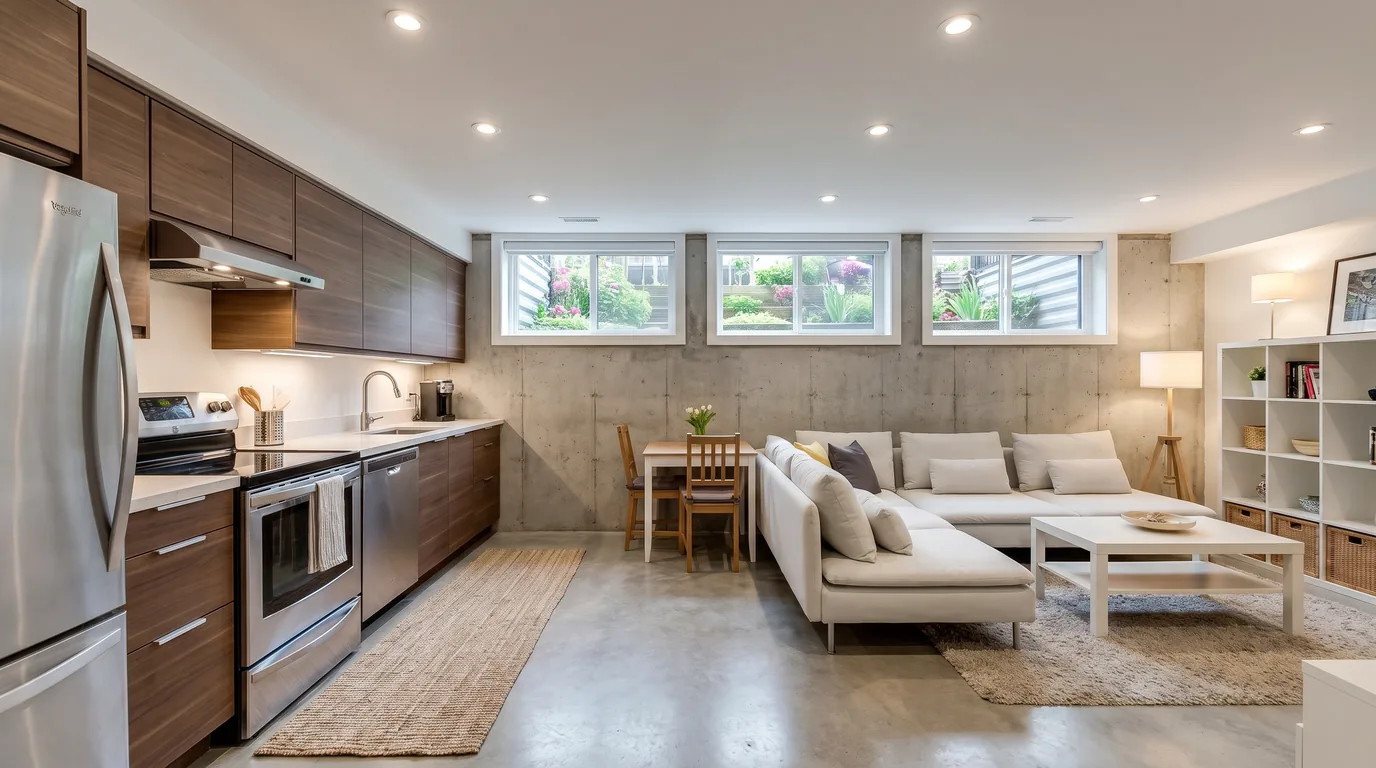
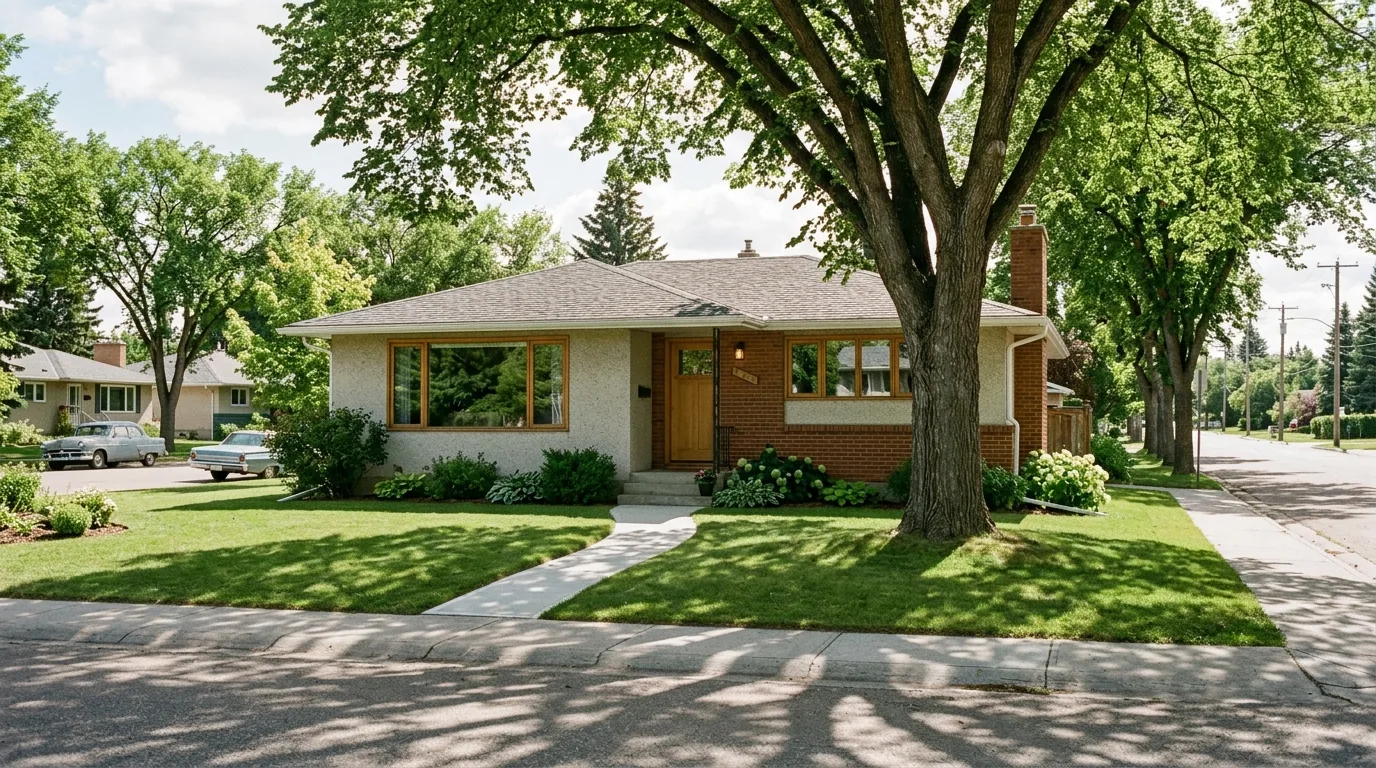
Is That Basement Suite Legal? How to Check Before You Offer

A basement suite changes the maths on a first home more than almost anything else you can buy. It can also be the reason your lender walks away a week before possession. The difference between those two outcomes is paperwork, and you can check most of it yourself before you write an offer.
The short answer
A legal secondary suite in Edmonton needs both a development permit and a building permit, plus the trade permits for whatever was actually built. The City publishes a public map of the suites that hold them and have passed inspection. If an address is not on that map it is a question to ask, not a verdict — but it is a question you want answered before your conditions come off, not after.
Key takeaways
- "Suite" in a listing description is a marketing word. It carries no information about permits.
- A permitted suite needs a development permit and a building permit, and trade permits for electrical, plumbing, gas and HVAC as applicable.
- The City publishes Secondary Suites (Completed Permits) as open data — a map of suites that hold both permits and have passed Safety Code and Fire Code inspection.
- The City's own caveat: that map "should not be relied on to determine compliance of any property with any regulatory requirements", and a properly permitted suite can be missing if the owner never registered it.
- Lenders and insurers treat an unpermitted suite differently from a permitted one, and the consequences land on whoever owns the house next — not whoever built it.
Who this guide is for
Edmonton buyers looking at homes advertised with a basement suite, an in-law suite, a nanny suite, or a "separate entrance to lower level" — and anyone planning to count the rent toward qualifying for the mortgage.
Why the word "suite" tells you nothing
Listing remarks are written to sell. "Suite", "suited", "illegal suite", "non-conforming suite" and "suite potential" all appear in Edmonton listings, and none of them is a defined term with a permit attached. The same basement can be described three different ways by three different agents without anyone being dishonest.
What matters is a small number of specific documents, and they either exist or they do not.
Be careful with the phrase non-conforming. In zoning it means a use that was legally established and no longer matches the current bylaw — which is a protected position, not a problem. It is often used loosely to mean “built without permits”, which is the opposite. If you hear it, ask which one is meant.
What a permitted suite actually needs
- A development permit. Confirms the use is allowed on that site.
- A building permit. Confirms the construction met the code — egress windows, ceiling heights, fire separation between the units, smoke alarms.
- Trade permits for the work actually done: electrical, plumbing, gas, HVAC.
- A Sanitary Sewer Trunk Charge, which applies to each suite.
Starting work without them can bring stop-work orders, fines or administrative penalties. Those attach to the property and its current owner. A suite built without permits in 2011 is your problem in 2026 if you are the one holding title.
How to check an address yourself
The City publishes the suites that made it through the process. Search the address on the Secondary Suites (Completed Permits) map. The dataset covers suites that "have acquired necessary development and building permits and have been inspected to meet Alberta Safety Code and Fire Code requirements".
Read it the way the City asks you to. Its own description says the map "should not be relied on to determine compliance of any property with any regulatory requirements", and asks owners whose permitted suites are missing to contact the City to be added. So:
- On the map — good sign, and worth confirming the permit numbers anyway.
- Not on the map — unknown, not condemned. Ask.
What to ask, and how to ask it
Put it to the listing agent in writing, before conditions come off:
- Was the suite permitted? Please provide the development and building permit numbers.
- Were trade permits pulled, and were final inspections passed?
- Is the suite currently tenanted, and on what kind of agreement?
A seller who has the paperwork will produce it quickly, because it is worth money to them. A vague answer is itself an answer.
What it means for your financing
If you are counting suite rent toward qualifying, your lender decides how much of it counts and on what evidence. That policy varies by lender and it is not something to assume — it is something to confirm with your broker while you still have a financing condition. An unpermitted suite may be treated as no income at all, which can move your approval by a six-figure amount.
Insurance is the second half of the same question, and it is the one people forget: an insurer that will not write the property is a financing problem, because a lender will not advance without coverage.

Ryan McCann
Ryan is an Edmonton-based REALTOR® with MaxWell Polaris and the person behind Padster. He's helped over 2,200 clients in the Edmonton area buy and sell their home.
Contact Ryan today at 780-964-8445 to talk through your next step.
Last reviewed 20 August 2026. General information for Edmonton-area buyers — not individualized financial, mortgage, legal or tax advice. Mortgage rules, government programs and market figures change; confirm current details with a licensed mortgage professional, an Alberta real-estate lawyer, or the relevant government source before making a decision. Padster is not a brokerage.
Sources
- City of Edmonton — Secondary Suites
- City of Edmonton Open Data — Secondary Suites (Completed Permits)
Your next step
See what a suited home costs monthly
Every listing here is priced by what it costs you each month, before any suite rent is counted.
Search Edmonton by monthly paymentFrequently asked questions
How do I find out if a basement suite in Edmonton is legal?
Search the address on the City's Secondary Suites (Completed Permits) open data map, which lists suites holding both a development and a building permit that have passed Safety Code and Fire Code inspection. The City notes the map should not be relied on to determine compliance, so also ask the listing agent in writing for the permit numbers.
What permits does a secondary suite need in Edmonton?
A development permit and a building permit, plus trade permits for the electrical, plumbing, gas and HVAC work actually done. Each suite is also subject to a Sanitary Sewer Trunk Charge.
Can I use the rent from a basement suite to qualify for a mortgage?
Sometimes, and how much counts depends on your lender's policy and on whether the suite is permitted. Confirm it with your broker while you still have a financing condition rather than assuming.
Is an unpermitted suite illegal to use?
It is not permitted, which is what matters to you as a buyer. Enforcement, insurance and lending consequences attach to the property and its current owner, not to whoever built it.
What does non-conforming mean for a suite?
In zoning it describes a use that was legally established and no longer matches the current bylaw. It is often used loosely to mean built without permits, which is a different situation entirely — ask which one is meant.