What to Check When Buying an Older Edmonton Home
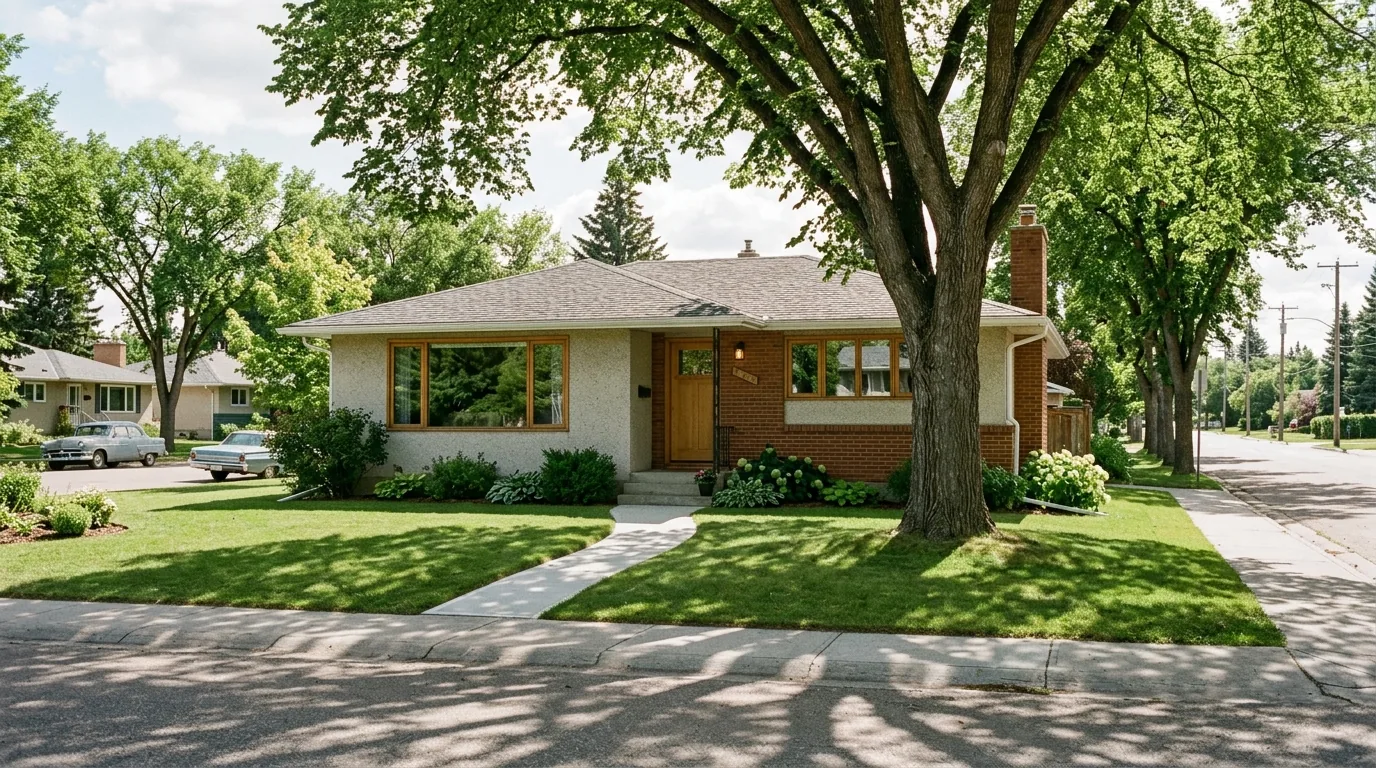
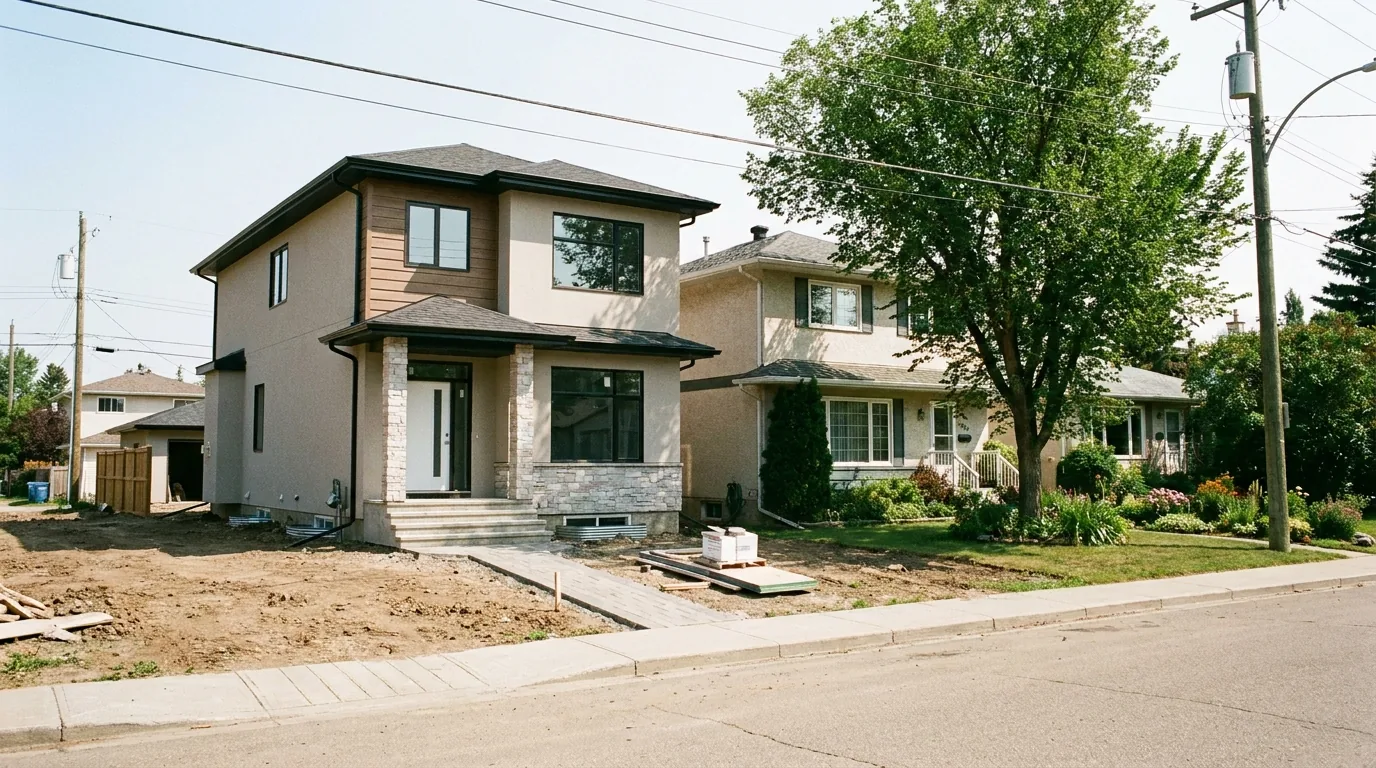
Older homes in Edmonton are frequently the better buy: bigger lots, established neighbourhoods, mature trees, and construction that has already proved it stands up. What they also carry is the building practice of their decade, and some of those practices are now known problems. Knowing which decade brings which question turns an inspection from a formality into a tool.
The short answer
Ask about the four expensive things first — roof, furnace, hot water tank and windows — then ask the era-specific questions: aluminum wiring in some 1960s and 1970s homes, poly-B plumbing in some homes from the late 1970s through the mid 1990s, and asbestos-containing materials in homes built before the 1990s. None is automatically a reason to walk away. All are reasons to have a professional look properly.
Key takeaways
- Older does not mean cheaper in Edmonton — the pre-1960 stock sits on central land and prices accordingly.
- Era-specific materials are risk factors to investigate, not defects to assume.
- Insurance is the practical constraint: some insurers ask about wiring, plumbing and roof age before quoting.
- Undisturbed asbestos-containing material is generally managed rather than removed; renovation is what changes that.
- A specialised inspection costs a fraction of what the problems it finds cost.
Who this guide is for
Buyers considering an older Edmonton home. This is orientation for what to ask about — a qualified home inspector, electrician or abatement professional is who determines what any specific property actually has.
How much of the market is older
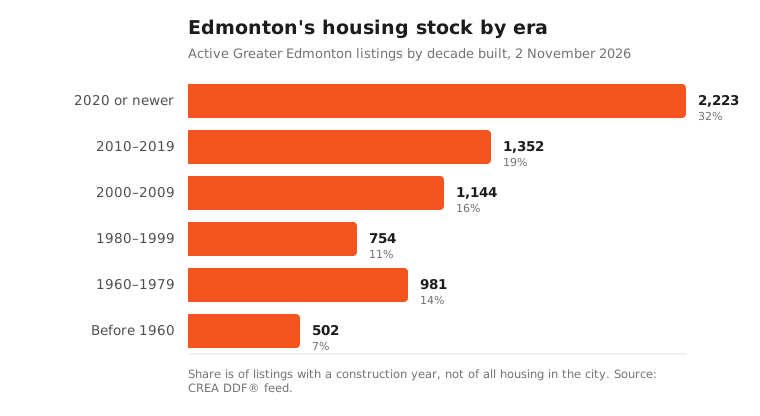
A substantial share of Edmonton's listings predate 2000. These are not fringe considerations — for many buyers here, at least one of them applies to the home they end up buying.
Aluminum wiring
Used in some homes built roughly between the mid 1960s and late 1970s. Aluminum expands and contracts differently from copper, which over time can loosen connections at outlets and switches, and loose connections generate heat.
It is not inherently unsafe and it is not something to panic about — a great many homes with it are fine. It is, however, something insurers ask about, and some require an inspection or remediation such as approved connectors at every device before they will write a policy.
What to do: establish what the home has, and get a quote from a licensed electrician if it is aluminum. Ask your insurance broker before your condition deadline, not after.
Poly-B plumbing
Polybutylene supply piping was widely installed from around the late 1970s into the mid 1990s. It is usually grey, and it has a history of failures — often at fittings, and often without warning.
The consequence is water damage rather than a safety hazard, but water damage is expensive and insurers know it. Some decline to insure homes with it, and some price it accordingly.
What to do: ask directly whether the home has poly-B and whether it has been replaced. If it is present, get a repiping quote and speak to an insurer during the condition period.
Do the insurance call before your conditions come off, not after. Wiring, plumbing and roof age can all affect whether a policy is offered and at what price — and you need insurance in place for possession day, which is not the moment to discover a problem.
Asbestos-containing materials
Common in Canadian construction before the 1990s: vermiculite attic insulation, some floor tiles and their adhesives, textured ceilings, pipe wrap and older drywall compound.
The important distinction is condition and disturbance. Material that is intact and undisturbed is generally managed in place rather than removed. Cutting, drilling or demolishing it is what creates exposure — which is why this matters most to buyers planning renovation.
What to do: if you intend to open walls or ceilings in a pre-1990 home, budget for testing before the work starts and use qualified abatement professionals where it is confirmed.
The other era questions
- Knob-and-tube wiring in genuinely old homes — an insurance question, and usually a replacement.
- Galvanised or lead supply lines in the oldest stock — ask about the service line as well as the internal plumbing.
- Underground oil tanks on rural or acreage properties that once used oil heat.
- Aging clay sewer lines, where root intrusion is common. A camera inspection is inexpensive and definitive.
- Windows and insulation — the comfort and heating-cost question in an Edmonton winter.
How to use all this
Not as a list of reasons to avoid older homes. Edmonton's mature neighbourhoods are among the best places to live in the city, and their housing is often better value than newer stock further out.
Use it to ask better questions during your condition period, to price what needs doing, and to negotiate with information rather than anxiety. A known problem with a quote attached is a negotiating position. An unknown one discovered after possession is just a bill.

Ryan McCann
Ryan is an Edmonton-based REALTOR® with MaxWell Polaris and the person behind Padster. He's helped over 2,200 clients in the Edmonton area buy and sell their home.
Contact Ryan today at 780-964-8445 to talk through your next step.
Last reviewed 12 August 2026. General information for Edmonton-area buyers — not individualized financial, mortgage, legal or tax advice. Mortgage rules, government programs and market figures change; confirm current details with a licensed mortgage professional, an Alberta real-estate lawyer, or the relevant government source before making a decision. Padster is not a brokerage.
Sources
- Government of Canada — Health risks of asbestos
- CMHC — Information for consumers
- Alberta Municipal Affairs — Safety codes
- Construction-era listing counts derived from the CREA DDF® feed for Greater Edmonton, refreshed with this site.
Your next step
See what the older stock costs
Edmonton's mature neighbourhoods are often better value than newer areas. Search by monthly payment and see for yourself.
Search Edmonton by monthly paymentFrequently asked questions
Is aluminum wiring dangerous?
It is not inherently unsafe, but connections can loosen over time and generate heat. Many insurers ask about it and some require inspection or remediation, such as approved connectors at every device, before offering a policy. Have a licensed electrician assess it.
What is poly-B plumbing and is it a problem?
Polybutylene supply piping, installed from roughly the late 1970s to the mid 1990s and usually grey. It has a history of failures at fittings, often without warning. The risk is water damage, and some insurers decline or surcharge homes that still have it.
Should I avoid homes with asbestos?
Not automatically. Asbestos-containing material that is intact and undisturbed is generally managed in place. The risk arises when it is cut, drilled or demolished — so it matters most if you plan to renovate. Test before that work begins.
What year did they stop using poly-B in Canada?
Its use largely ended by the mid 1990s, though the exact timing varies. Treat the date as a prompt to check rather than a guarantee either way — confirm what the specific home has.
Are older homes cheaper in Edmonton?
Not reliably. Edmonton's pre-1960 stock sits on central land and prices above homes from some more recent decades. Age is a poor proxy for price here; location and property type matter more.
Do I need a special inspection for an older home?
A standard inspection is the starting point. Where it flags wiring, plumbing, the sewer line or suspected asbestos, a specialist assessment is worth the cost — it is a small fraction of what the underlying problems cost to fix.