Rent-to-Own in Alberta: How It Works and Why Almost Nobody Uses It
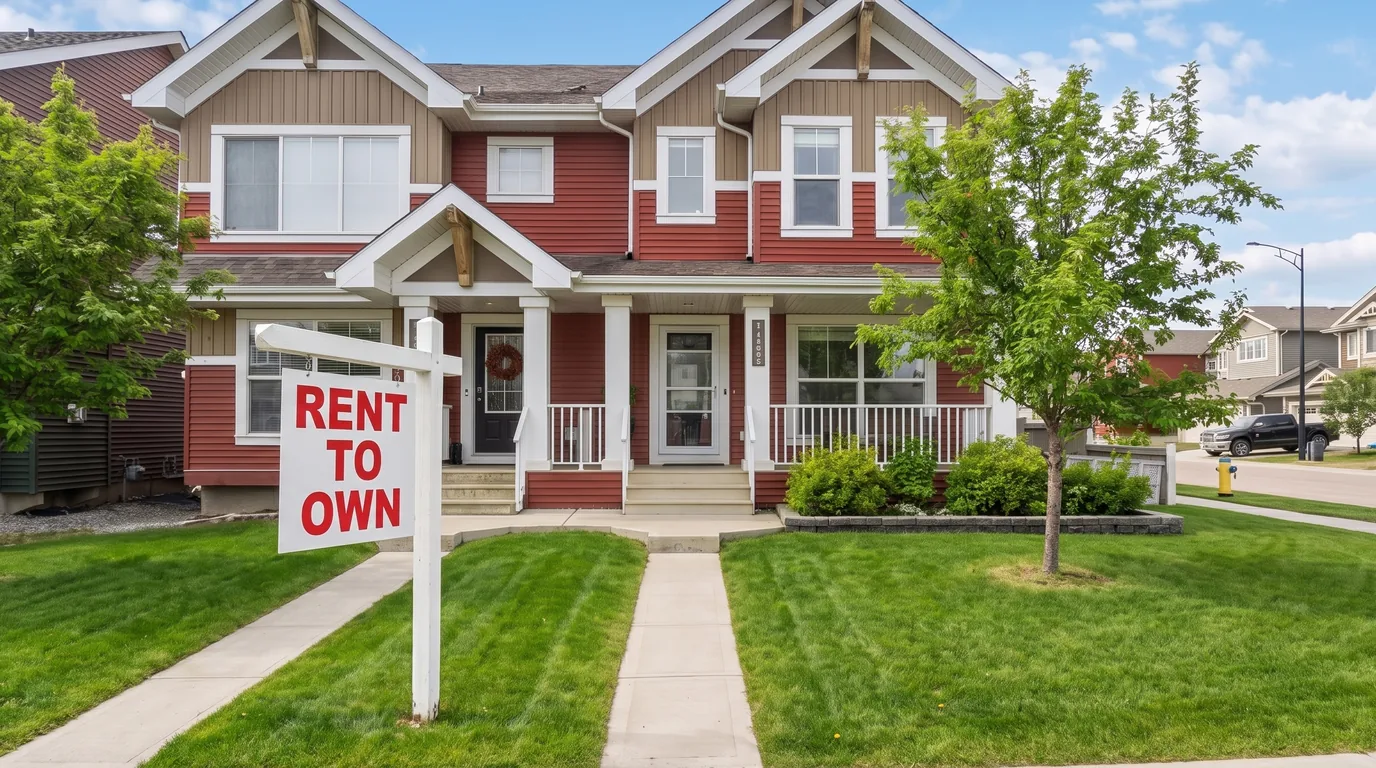
Rent-to-own gets searched a lot in Alberta and used very little, and the gap between those two facts is the most useful thing to understand about it. It is marketed as a side door into ownership for people who cannot qualify for a mortgage today. Sometimes it is exactly that. More often it is an expensive way to pay above-market rent for a house you may not end up owning.
The short answer
A rent-to-own agreement is two contracts: a lease, and an option to purchase later at a price agreed now. Part of each month’s payment is credited toward the eventual down payment. The catch is that the option fee and the accumulated credits are typically non-refundable — if you cannot get a mortgage at the end of the term, or you choose not to buy, that money generally stays with the seller.
Key takeaways
- It is two agreements, not one: a residential lease plus a separate option to purchase. Read them as two documents, because they can fail independently.
- An upfront option fee plus monthly rent credits build your future down payment — and are usually forfeited if the purchase does not complete.
- The monthly payment is normally above market rent, because part of it is the credit.
- You still have to qualify for a mortgage at the end. Nothing about the arrangement changes the stress test at 5.25% or contract plus 2%, or the CMHC minimum credit score of 600.
- You are not on title during the lease, so the seller’s financial problems can become yours.
Who this guide is for
Albertans who cannot qualify for a mortgage today and are being offered — or are considering searching for — a rent-to-own arrangement, and who want the risks stated plainly before signing anything.
How rent-to-own is supposed to work
You sign a lease for a term, commonly two to five years, and alongside it an option agreement giving you the right — not the obligation — to buy the property at a price fixed now or by a formula agreed now. You pay an upfront option fee, often several per cent of the purchase price. Each month you pay rent, and an agreed portion above market rent is credited toward your future down payment.
At the end of the term you arrange a mortgage, exercise the option, and the accumulated credits plus the option fee count toward your down payment. When it works, it works exactly like that.
Why almost nobody in Edmonton actually uses it
- Conventional financing is usually cheaper and available sooner. The minimum down payment is 5% on the first $500,000 — roughly $17,500 on a $350,000 Edmonton home. For many people two years of disciplined saving in an FHSA reaches that faster and at far lower cost than a rent-to-own term.
- The qualifying problem is deferred, not solved. If your credit is the obstacle today, the arrangement does not fix it; it just moves the deadline. You still face the same stress test and the same 600 minimum at the end.
- The price is set now for a purchase later. If the market softens, you have contracted to overpay. If it rises, the seller may look for a way out.
- You do not own it. Until the option is exercised you are a tenant. If the seller stops paying their mortgage, or registers other charges against the title, your position is weak.
The questions to ask before signing anything
- Exactly how much of each monthly payment is a credit, and where is that recorded?
- What happens to the option fee and the credits if you cannot obtain financing at the end?
- Is the purchase price fixed, or set by appraisal at the time of purchase?
- Is there a caveat registered on title protecting your option? Has anyone searched the title for existing charges?
- Who is responsible for repairs, property tax and insurance during the lease — you or the owner?
- What happens if the seller sells, refinances, or defaults?
If it is being pitched as a way to skip qualifying entirely, treat that as a warning rather than a feature. Have an Alberta real estate lawyer review both the lease and the option agreement before you sign either — not after.
What to do instead, in most cases
Find out precisely how far you are from qualifying, which usually takes one conversation with a broker rather than a five-year contract. If the obstacle is credit, it is often fixable in months with on-time payments and lower balances. If it is the down payment, $8,000 a year into an FHSA to a $40,000 cap is a faster and cheaper route than paying above-market rent for the privilege of maybe buying later.

Ryan McCann
Ryan is an Edmonton-based REALTOR® with MaxWell Polaris and the person behind Padster. He's helped over 2,200 clients in the Edmonton area buy and sell their home.
Contact Ryan today at 780-964-8445 to talk through your next step.
Last reviewed 22 August 2026. General information for Edmonton-area buyers — not individualized financial, mortgage, legal or tax advice. Mortgage rules, government programs and market figures change; confirm current details with a licensed mortgage professional, an Alberta real-estate lawyer, or the relevant government source before making a decision. Padster is not a brokerage.
Sources
- Financial Consumer Agency of Canada — Buying a home
- Government of Alberta — Residential tenancies in Alberta
- Government of Alberta — Land Titles
- Office of the Superintendent of Financial Institutions — Minimum qualifying rate for uninsured mortgages
Your next step
Get a real number, not a guess
A broker who works with first-time buyers, renters and newcomers every day. Free, no obligation.
Request a free pre-approval introductionFrequently asked questions
How does rent-to-own work in Alberta?
You sign a residential lease plus a separate option to purchase at a price agreed now. You pay an upfront option fee, and a portion of each month's above-market payment is credited toward a future down payment. At the end of the term you must still obtain a mortgage to complete the purchase.
Do I get my option fee back if I do not buy?
Typically no. Option fees and accumulated rent credits are usually structured as non-refundable if the purchase does not complete — which is the single biggest risk in the arrangement and the reason independent legal review matters.
Is rent-to-own a good option if I cannot qualify for a mortgage?
Rarely the best one. It defers the qualifying problem rather than solving it — you still face the stress test and the CMHC minimum credit score at the end of the term. Fixing credit or saving into an FHSA is usually faster and far cheaper.
Am I the owner during a rent-to-own term?
No. You are a tenant with a contractual option until the purchase completes. That is why a caveat registered on title and a title search for existing charges matter before you sign.
Is the purchase price fixed in a rent-to-own agreement?
Often, though some agreements set it by appraisal at the time of purchase. A fixed price means you carry the risk if the market softens, so confirm which structure is being offered.
What should I do before signing a rent-to-own contract?
Have an Alberta real estate lawyer review both the lease and the option agreement, confirm in writing how credits are recorded and what happens if financing fails, and get a title search done.