Price Per Square Foot in Edmonton, and What It Doesn't Tell You

Price per square foot is the measure buyers reach for when they want to know whether something is fairly priced. It is genuinely useful — and it is misused more often than any other number in real estate, because most people assume it means the opposite of what it does.
The short answer
The median Edmonton listing is around $297 a square foot, but that citywide figure is nearly useless on its own. Apartment condos run about $239 and detached houses about $319 — not because houses are worse value, but because a detached price buys the lot as well as the building. Use the measure to compare similar homes in the same area, and nowhere else.
Key takeaways
- Across Greater Edmonton the median is about $297 a square foot, with the middle 80% of listings falling between roughly $206 and $432.
- Detached houses cost more per square foot than apartments here — the opposite of what most people expect.
- The reason is land. A house price includes a lot; an apartment price includes a share of a building.
- Central Edmonton's detached homes pass $400 a square foot on land value alone.
- It is a comparison tool for like-with-like, not a value score.
Who this guide is for
Edmonton buyers using price per square foot to judge listings, and anyone who has been told a home is "expensive per foot" without being told what it was compared against. Figures refresh with our listing feed.
What each property type costs per foot
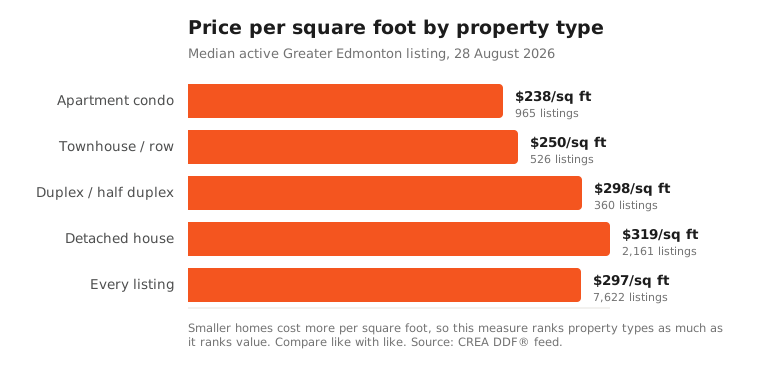
That ordering surprises people. The common belief is that small units cost more per foot because kitchens and bathrooms are fixed costs spread over less space — which is true in construction, and not what shows up in Edmonton asking prices.
Why land explains most of it
When you buy a detached house you buy the ground it sits on. That land is priced by location, and it is counted in the price but not in the square footage. So the more land a property includes, the higher its price per interior foot will look.
An apartment includes a share of the land under the building, divided among every unit. Spread across sixty units, that share is small — which pushes the per-foot figure down even in expensive central locations.
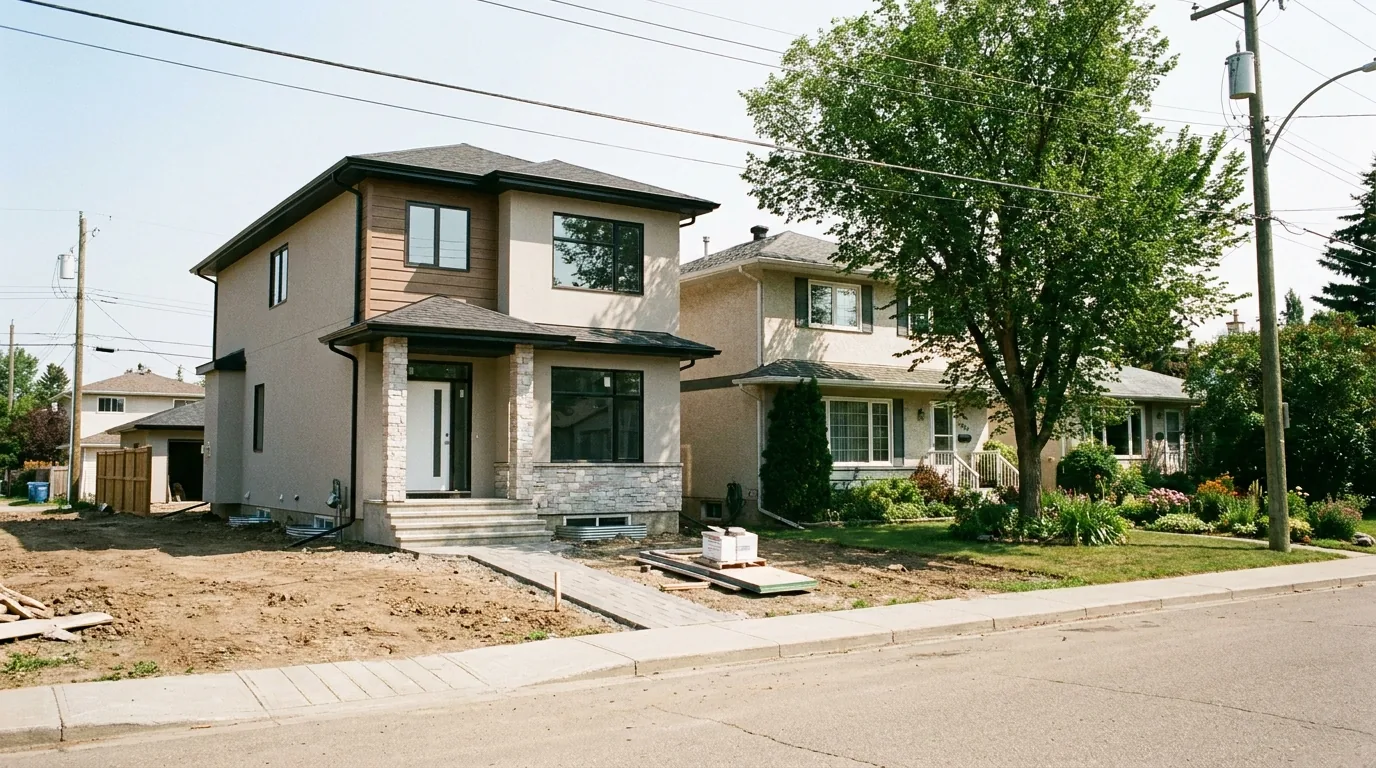
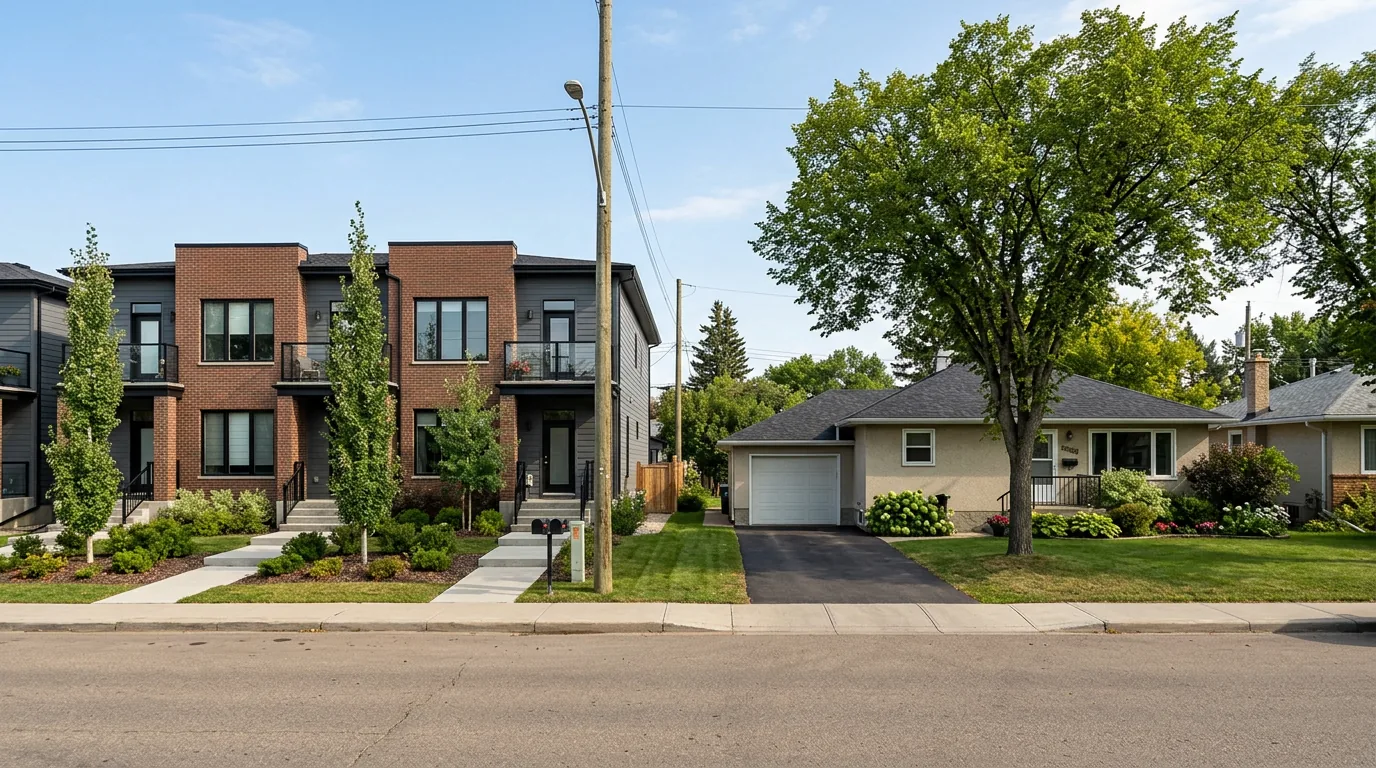
This is why an infill house on a small central lot and a larger house on a bigger lot further out can show similar prices per square foot while being completely different purchases. The measure is blind to the land, which is often the more valuable half.
Where the measure genuinely works
- Two similar houses on the same street. Same type, same era, similar lots — here it is a fair comparison and a useful one.
- Two units in the same building. Almost perfectly like-for-like.
- Tracking one property over time, where the land and building are constant.
- Sanity-checking a renovation premium. If a renovated home asks 30% more per foot than its unrenovated neighbour, that is a question worth asking.
Where it misleads
- Across property types. Condo against house is mostly a measurement of which is which.
- Across areas with different land values. It reads land cost as building cost.
- Where the finished area is measured differently. A finished basement may or may not be counted, which can swing the figure substantially.
- On very small or very large homes, where fixed costs and diminishing returns both distort it.
None of this makes the measure useless. It makes it a comparison tool with a narrow valid range, which is a different thing from a score.

Ryan McCann
Ryan is an Edmonton-based REALTOR® with MaxWell Polaris and the person behind Padster. He's helped over 2,200 clients in the Edmonton area buy and sell their home.
Contact Ryan today at 780-964-8445 to talk through your next step.
Last reviewed 18 August 2026. General information for Edmonton-area buyers — not individualized financial, mortgage, legal or tax advice. Mortgage rules, government programs and market figures change; confirm current details with a licensed mortgage professional, an Alberta real-estate lawyer, or the relevant government source before making a decision. Padster is not a brokerage.
Sources
- Price and area figures derived from the CREA DDF® feed for Greater Edmonton, refreshed with this site.
- CMHC — Housing market data and research
Your next step
Compare on the monthly number instead
Price per foot compares buildings. Monthly payment compares what a home costs you. Every listing here is priced that way.
Search Edmonton by monthly paymentFrequently asked questions
What is the average price per square foot in Edmonton?
The median active listing is around $297 a square foot, though the middle 80% of listings span roughly $206 to $432. The figure varies far more by property type than by neighbourhood.
Why do houses cost more per square foot than condos in Edmonton?
Because a house price includes the land, and the land is not counted in the interior square footage. An apartment's share of land is divided across every unit in the building, which pulls its per-foot figure down.
Is a lower price per square foot better value?
Not by itself. A lower figure often just means a different property type or a cheaper location. It only signals value when you are comparing similar homes in the same area.
Does a finished basement count in the square footage?
It depends how the listing was measured, which is one of the reasons the measure is unreliable across listings. Ask what is included before comparing two figures.
How often do these figures update?
They are rebuilt from the CREA DDF® feed every time the site refreshes, several times a day.