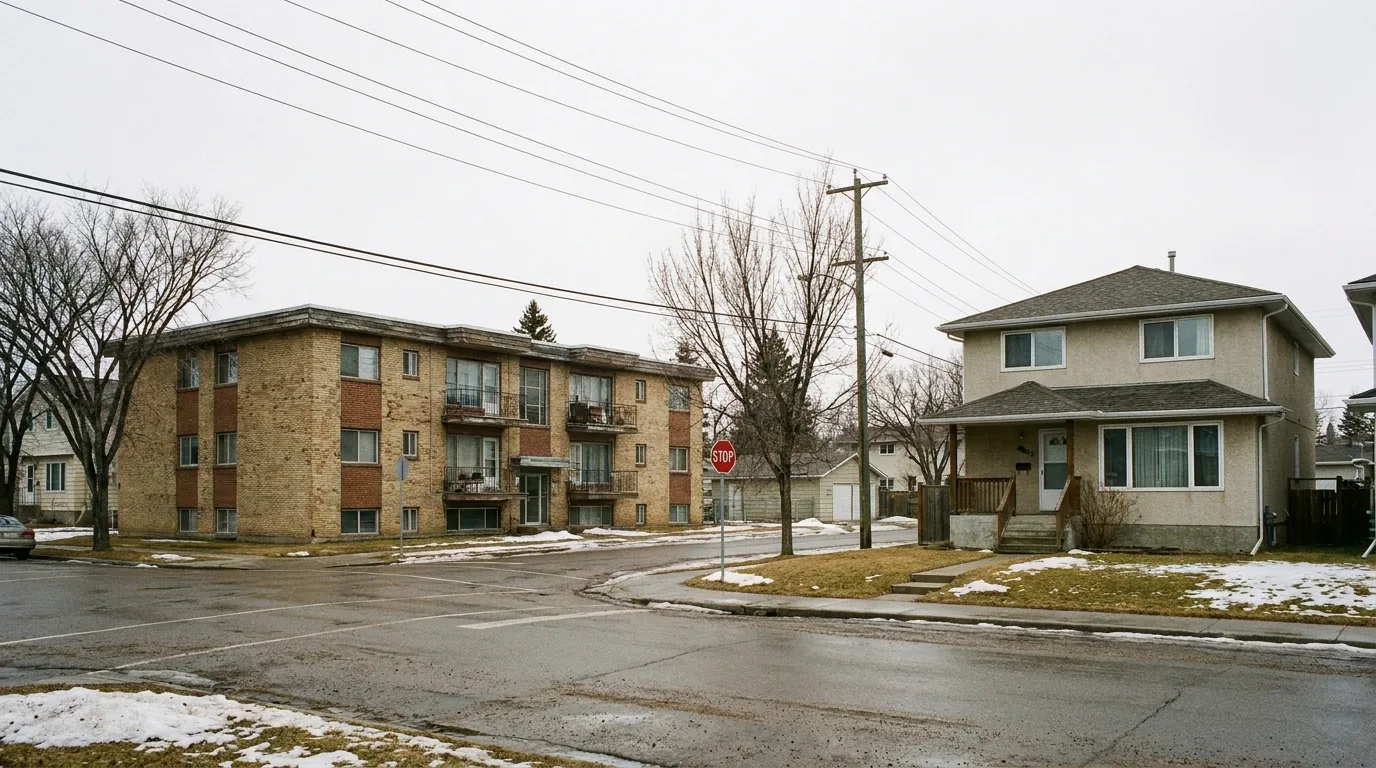
Edmonton Property Taxes Explained

Property tax is the ownership cost renters never see and new owners most often under-budget. It is not a fixed fee, it is not set by what you paid for the house, and it does not stop. Understanding how the number is produced makes it far easier to plan for — and to know when it is worth questioning.
The short answer
The City of Edmonton assesses your property's market value each year, then applies a tax rate set through the annual budget. Assessment times rate is your bill. Your assessment is not your purchase price, the rate changes yearly, and both the assessment and the bill have their own deadlines and appeal processes.
Key takeaways
- Your bill is assessed value multiplied by the year's tax rate. Two moving parts, set at different times by different processes.
- Assessment is an estimate of market value as of a legislated valuation date — not what you paid.
- A rising assessment does not automatically mean a rising bill; what matters is how your value moved relative to the city as a whole.
- You can pay in one annual instalment or spread it monthly through the City's payment plan.
- There is a defined window each year to question your assessment, and it closes.
Who this guide is for
New and prospective Edmonton homeowners budgeting for property tax. Rates and deadlines are set annually by the City — the links at the end are the authority, and the City publishes a calculator that will give you a figure for a specific property.
How the number is produced
Assessment. The City estimates the market value of every property as of a legislated valuation date, using sales of comparable properties. You receive a notice showing that value, typically early in the year.
Tax rate. Council sets a budget, and the rate is what raises the required revenue across the total assessed value of the city. It is set annually and it changes.
Your bill. Assessment multiplied by the rate, with a provincial education portion included that the City collects on the province's behalf.
We have deliberately not printed a rate here. It is set annually, and a figure typed into an article ages badly and quietly misleads. Use the City's own estimator for a current number on a specific property.
Why your bill can rise when your assessment does not
This is the part that surprises people. The City does not collect more simply because assessments went up — it collects what its budget requires, and the rate adjusts accordingly.
What matters is your property relative to the average. If assessments across Edmonton rise 5% and yours rises 5%, your share of the total is unchanged, and your bill moves with the budget rather than with the assessment. If yours rises 12% while the city average rises 5%, you are carrying a larger share and your bill rises more.
When your assessment notice arrives, the useful question is not “did my value go up?” but “did it go up more than the city average?” That comparison, not the raw percentage, predicts what happens to your bill.
If you think the assessment is wrong
The notice states a deadline for questioning it, and that deadline is firm. Start by contacting the City — many disagreements are resolved informally once the assessor sees an error in the record, such as the wrong square footage, a basement recorded as finished that is not, or a garage that no longer exists.
If it is not resolved that way, there is a formal complaint process to an independent review board, with its own deadline and fee. Note what is being disputed: the estimate of market value, not whether the tax is affordable.
Bring evidence — comparable sales around the valuation date, and documentation of any factual error.
How to pay it
Two routes. Pay the full amount by the annual deadline, or join the City's monthly payment plan, which spreads it across the year by pre-authorised withdrawal.
Some lenders will also collect property tax with your mortgage payment and remit it for you. That is convenient and it obscures the number — if you choose it, still read your assessment notice, because it is the document that tells you what is happening.
For a first-time owner used to rent, the monthly plan is usually the easier adjustment. A single annual bill is a large amount to have ready if you have not been setting it aside.
Budgeting for it before you buy
Ask for the current annual property tax on any property you are seriously considering — it is a normal question and the figure is knowable. Divide by twelve and add it to your monthly cost before deciding whether the home is affordable.
This is the cost most often missing when a buyer compares a mortgage payment against their rent, and it is large enough to change the answer.

Ryan McCann
Ryan is an Edmonton-based REALTOR® with MaxWell Polaris and the person behind Padster. He's helped over 2,200 clients in the Edmonton area buy and sell their home.
Contact Ryan today at 780-964-8445 to talk through your next step.
Last reviewed 12 August 2026. General information for Edmonton-area buyers — not individualized financial, mortgage, legal or tax advice. Mortgage rules, government programs and market figures change; confirm current details with a licensed mortgage professional, an Alberta real-estate lawyer, or the relevant government source before making a decision. Padster is not a brokerage.
Sources
- City of Edmonton — Property assessment
- City of Edmonton — Property Tax Monthly Payment Plan
- Government of Alberta — Property assessment in Alberta
- City of Edmonton — Open Data Portal
Your next step
Budget the full monthly cost
Property tax is one of the costs that sits on top of a mortgage payment. Start from the payment, then add the rest.
Browse Edmonton homes by monthly paymentFrequently asked questions
How are Edmonton property taxes calculated?
The City assesses your property's market value as of a legislated valuation date, then applies the tax rate set through that year's budget. Assessment multiplied by rate is your bill, including a provincial education portion the City collects on the province's behalf.
Is my property assessment the same as what I paid?
No. Assessment is an estimate of market value at a legislated valuation date, produced from comparable sales. It can differ from your purchase price in either direction.
My assessment went up — will my taxes go up?
Not necessarily. The City collects what its budget requires and the rate adjusts, so what matters is how your assessment moved relative to the city average. An increase in line with the average does not by itself increase your share.
Can I appeal my property assessment?
Yes, within the deadline stated on your notice. Contact the City first, since factual errors are often corrected informally. Beyond that there is a formal complaint process with its own deadline and fee. You are disputing the estimate of market value, not the tax rate.
Can I pay Edmonton property taxes monthly?
Yes. The City offers a monthly payment plan by pre-authorised withdrawal as an alternative to a single annual payment. Some lenders will also collect and remit taxes with your mortgage payment.
What happens if I do not pay?
Unpaid property taxes accrue penalties and remain attached to the property. It is not a bill to leave outstanding — contact the City early if paying is a problem, because options exist.