Buying Near the LRT in Edmonton

Transit access is usually discussed as something you pay extra for. In Edmonton the listings tell a more interesting story, and reading it correctly matters — because the obvious conclusion from the numbers is the wrong one.
The short answer
Listings marketed as near the LRT carry a lower median payment than the market overall. That is not a discount for transit — it reflects what kind of housing sits near LRT stations, which is disproportionately apartment condos in central areas. Transit access is a genuine benefit worth weighing; it is just not visible as a price premium in this data.
Key takeaways
- LRT-adjacent listings show a materially lower median than the market as a whole.
- That gap is a housing-mix effect. It is not evidence that transit reduces value.
- Condo fees are not in these figures, and apartment-heavy areas carry them.
- For a household that can genuinely go car-light, transit access can be worth several hundred dollars a month in avoided costs.
- Visit at the hours you would actually travel. Frequency and walk time matter more than distance on a map.
Who this guide is for
Edmonton buyers weighing transit access. Figures come from how listings are tagged in our feed and refresh with it — they describe what is marketed as transit-adjacent, which is not identical to a measured distance from a station.
What the listings actually show
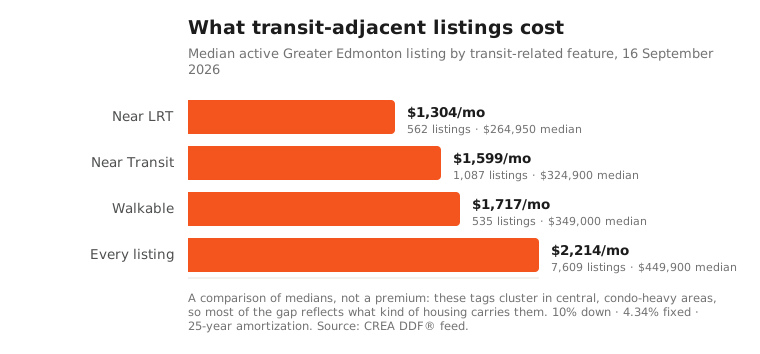
Read that chart carefully, because it is easy to misread in a way that flatters a conclusion. The LRT group is cheaper because it is full of apartments, and apartments are the cheapest form of ownership. It would be wrong to conclude that transit access lowers a home's value, and equally wrong to conclude Edmonton has no transit premium — this data cannot answer that question, because it does not compare like with like.
Add the condo fee before comparing anything on this chart with a detached home elsewhere. The transit-adjacent groups are apartment-heavy, and the fee is exactly the cost their lower payment leaves out.
What transit access is actually worth
The honest case is not about resale. It is about running costs.
A household that can drop from two vehicles to one avoids a payment, insurance, fuel, maintenance and parking. Depending on the vehicle, that is plausibly several hundred dollars a month — which, put against a mortgage, is a meaningful amount of house.
The condition is that it has to be real. Transit that works for your actual commute, at your actual hours, is worth a great deal. Transit that is nearby but not useful to you is worth very little.
Central communities carry most of the transit-adjacent stock. These are the lowest-priced ones with real inventory right now:
How to test it before you buy
- Walk from the property to the station, timed. A map distance and a winter walk are different things.
- Ride the route at the hour you would actually travel, in both directions.
- Check frequency at the edges — early, late, and at weekends, when service is thinnest.
- Look at what is between you and the station. Lighting, crossings, sidewalk clearing in January.
- Consider the trade-off directly. Being close to a station means being close to the activity around it, which some people want and others do not.
Planned lines and future stations
Edmonton's LRT network continues to be extended, and it is tempting to buy ahead of a planned station. Be careful with that reasoning: timelines move, alignments change, and construction itself can be disruptive for years.
Buying somewhere you are happy to live now, which may improve later, is sound. Buying somewhere you would not otherwise choose on the strength of a projected completion date is a bet on a schedule.

Ryan McCann
Ryan is an Edmonton-based REALTOR® with MaxWell Polaris and the person behind Padster. He's helped over 2,200 clients in the Edmonton area buy and sell their home.
Contact Ryan today at 780-964-8445 to talk through your next step.
Last reviewed 12 August 2026. General information for Edmonton-area buyers — not individualized financial, mortgage, legal or tax advice. Mortgage rules, government programs and market figures change; confirm current details with a licensed mortgage professional, an Alberta real-estate lawyer, or the relevant government source before making a decision. Padster is not a brokerage.
Sources
- City of Edmonton — LRT projects and planning
- Edmonton Transit Service — Routes and schedules
- Listing medians and feature tags derived from the CREA DDF® feed for Greater Edmonton, refreshed with this site.
Your next step
Find transit-adjacent homes in your range
Search Greater Edmonton on the map by monthly payment, and see for yourself what sits near the lines.
Open the Edmonton map searchFrequently asked questions
Do homes near the LRT cost more in Edmonton?
The listings marketed as near LRT show a lower median payment than the market overall, but that reflects the housing mix — those areas are heavy in apartment condos, which are the cheapest form of ownership. This data cannot isolate a transit premium, because it does not compare like with like.
Is it worth buying near transit if I own a car?
It can be, if it lets your household run one vehicle instead of two. The savings on a payment, insurance, fuel and parking are real money. If your travel patterns mean the transit would go unused, the benefit is mostly theoretical.
Are LRT-adjacent homes harder to resell?
Nothing in this data supports that. Proximity to activity suits some buyers and not others, which affects who your buyer pool is rather than its size in any predictable direction.
Should I buy near a planned future LRT station?
Only if you would be happy there regardless. Timelines and alignments change, and construction can be disruptive for years. Treat a future station as possible upside, not as the reason for the purchase.
How do I know if transit will actually work for my commute?
Ride it, at the hours you would really travel, in both directions, and time the walk at each end. Frequency at the edges of the day matters more than distance on a map.